
Triangle Mobility Hub

Project Summary

location map

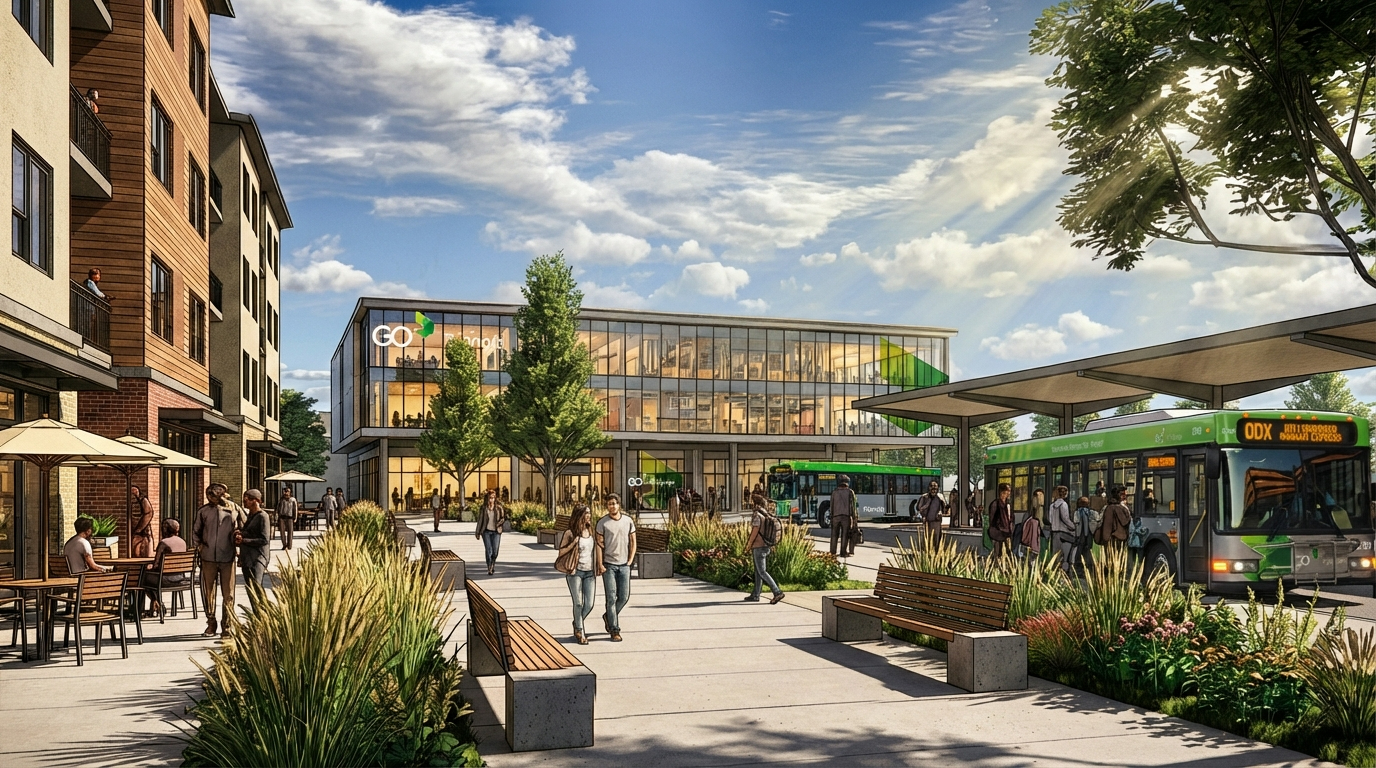
The Triangle Mobility Hub(TMH) will serve as the anchor for regional connectivity in the Triangle. Designed to make public transit faster, more reliable, and more comfortable, the TMH will offer new connections between buses, paratransit, microtransit, rideshare services, and other future transportation options, such as Bus Rapid Transit (BRT), Bikeway, and passenger rail, all in one convenient location. 

This new facility will enable GoTriangle to expand its bus service across the region, making it easier for people to access jobs, schools, healthcare, shopping, and recreation. With improved access to Research Triangle Park and surrounding communities, the TMH will promote more accessible and sustainable travel options for everyone.

We want to hear from you!

Please take a few minutes to complete our survey about the Triangle Mobility Hub.


Survey


2020

Icon 1

RTC Relocation Study

Summer
2024

Icon 2

GoTriangle awarded a $25m RAISE Grant from the Federal Transit Administration

Winter
2026

Icon 3

Informational awareness campaign launched with public feedback encouraged and gathered

Spring
2026

Icon 4

Locally preferred alternative finalized and environmental screening complete

Summer
2026

Icon 5

Final Design begins

2027

Icon 6

Construction begins

2029

Icon 7

TMH opens

 
We Are Here!
Bus

Triangle Mobility Hub Highlights

  • Covered boarding bays
  • Covered drop-off spaces for paratransit, microtransit, and rideshare vehicles
  • Climate-controlled waiting areas with Wifi and phone charging
  • Priority bus access to the facility to ensure comfortable and reliable transfers for riders making regional trips or last-mile connections

Proposed New Location


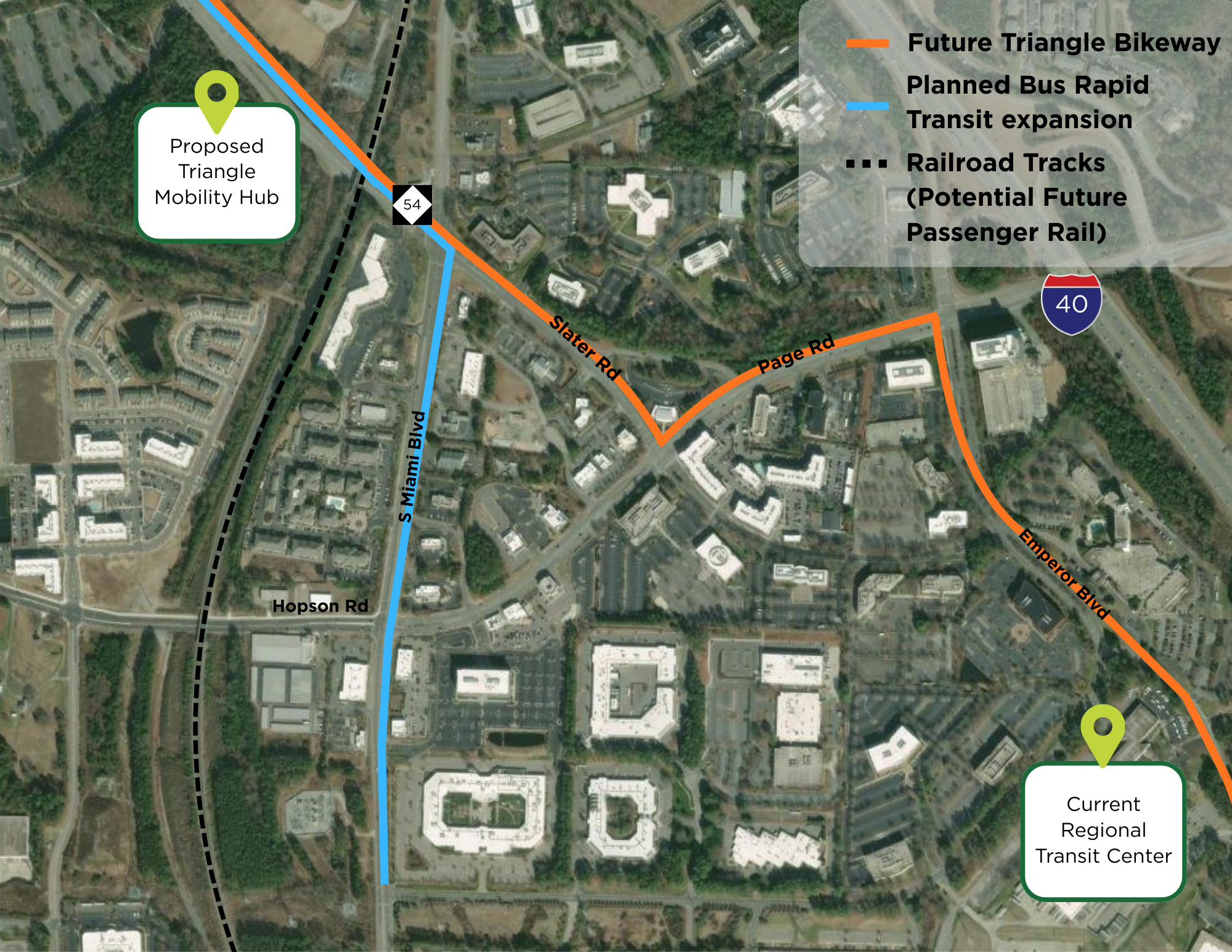
The proposed location for the new Triangle Mobility Hub places the facility at the heart of the fastest-growing regions in the U.S., with easy access to Raleigh-Durham International Airport and major employment centers.

location map
  • Just off I-40, near the intersection with NC Highway 54 and Miami Boulevard.
  • Less than a mile from Hub RTP, the emerging downtown destination for Research Triangle Park (RTP).
  • Along the proposed Triangle Bikeway, a regional 23-mile, shared-use path that will run through Raleigh, Cary, Morrisville, RTP, Durham, and Chapel Hill.
  • On the planned Bus Rapid Transit (BRT) expansion corridor.
  • Adjacent to existing rail lines, making it ideal for future passenger rail.
  • A little over a mile from the current Regional Transit Center.
Project Background

GoTriangle has occupied the current Regional Transit Center (RTC) at 4600 Emperor Boulevard in Durham since 2008, with the intention of relocating to a site more easily accessible from major highways and adjacent to planned investments in bus rapid transit and rail service. GoTriangle initiated the RTC Relocation Study in 2019 to evaluate opportunities for relocating the RTC to provide enhanced functionality, connectivity, and reliability.


As part of the RTC Relocation Study, GoTriangle collected input from riders and community members in 2020 to inform plans for a new transit hub. We heard the need for better bus service, faster and more reliable trips, easier connections between different types of transportation, and more comfortable places to wait such as shelters with lighting and real-time arrival info. We also heard the need for a location that’s easy to reach by car and bus. 


In 2022, GoTriangle teamed up with the Research Triangle Foundation (RTF) to explore ideas for the new transit hub and how it could support future development in the area. In 2023, RTF officially approved the site for the Triangle Mobility Hub.


In 2024, GoTriangle was awarded a $25 million federal grant to help build the Triangle Mobility Hub.


Who may I contact if I have questions about the project?

Catherine Miller, Director of Real Estate and TOD at GoTriangle – 919-485-7425, cmiller@gotriangle.org 
 

What is the Triangle Mobility Hub (TMH)?

The Triangle Mobility Hub (TMH) will serve as the region’s anchor for seamless connectivity, offering faster, more reliable, and comfortable public transit options. It will integrate buses, paratransit, microtransit, and rideshare services in one convenient location, featuring covered boarding bays, climate-conditioned waiting areas with phone charging capabilities, and priority access for regional transfers.

Where is the project located?

The Triangle Mobility Hub is planned to be located at the intersection of NC-54 and the railroad corridor near S Miami Blvd. This was determined after extensive research for the Regional Transit Center Relocation Study.

How much will it cost?

The estimated cost of the proposed project is approximately $58.2 million. This cost estimate will be updated as preliminary design and engineering efforts continue.

How will the project be funded?

  • The proposed project will be funded by a combination of local and federal funding.
  • In June 2024, the project was awarded a $25 million grant from the U.S. Department of Transportation’s Rebuilding American Infrastructure with Sustainability and Equity (RAISE) Grant Program.
  • An additional $5.5 million of the project cost will be supported by federal funds that the Triangle West Transportation Planning Organization awarded to the project in 2024. 
  • The remainder of the project cost will be funded from the voter-approved half-cent sales tax for transit in Wake, Durham, and Orange counties.
     

When will THM open?

The TMH is projected to begin construction in 2027 and open in 2029.

What is included in the facility?

The TMH will include: 

  • Covered boarding bays
  • Covered drop-off spaces for paratransit, microtransit, and rideshare vehicles 
  • Priority bus access for quick and reliable transfers
  • Climate controlled waiting areas for passenger comfort with phone charging areas
     

How did you choose this site?

To find the best location for the Triangle Mobility Hub, planners started with 113 potential sites and narrowed the list through multiple rounds based on criteria like highway access and site size, reducing it to three finalists. 

A scorecard evaluated each option—including staying at the current Regional Transit Center—against factors such as mobility, community benefits, cost of construction, accessibility to jobs, and multimodal connections. The final sites were also reviewed for public-private partnership opportunities to support nearby transit-oriented development.

The NC-54 site scored the highest based on the weighted evaluation criteria and was chosen as the planned location for the Triangle Mobility Hub.
 

Why is this project being implemented?

The Triangle Mobility Hub is being implemented to make travel in the region easier, faster, and more reliable. It will connect buses, paratransit, microtransit, and rideshare services in one convenient location, helping people reach jobs, schools, healthcare, and shopping without needing a car. By improving access to Research Triangle Park and surrounding communities, the TMH supports more sustainable and accessible transportation options for everyone.

How will this impact current routes?

All current routes will continue serving the Regional Transit Center (RTC) until construction of the Triangle Mobility Hub is complete. When updates or changes happen, GoTriangle will share information in advance through its usual communication channels, so riders know what to expect. The great news is that the proposed location is just down the street, making the transition as convenient as possible for riders!